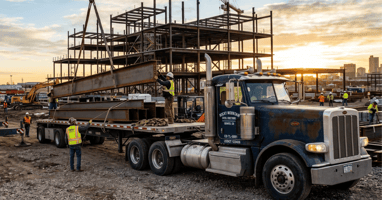
A truck pulls onto the site with 52 pieces of structural steel. The BOL says 52. The driver says 52. Your guy counts 52 off the truck and signs the delivery ticket. Three weeks later, during erection, piece W14x68-247 isn't in the yard. Nobody knows when it went missing. The fabricator says they shipped it. Your team says it never showed up. And the raising gang is standing around at $1,000 an hour while everyone argues about a piece of steel that may or may not have been on a truck three weeks ago.
This is not an unusual story. It's a regular Tuesday on a structural steel project.
Material tracking exists to prevent exactly this situation. Not by adding clipboards or spreadsheets to your crew's day, but by creating a verified digital record of every piece from delivery through erection.
The Problem Nobody Talks About Until It Costs Them
Material tracking on most steel erection projects is a manual, disconnected process. The fabricator ships based on their production schedule. The erector receives based on what shows up. The alignment between what was shipped, what arrived, and what the erection sequence actually needs is held together by phone calls, spreadsheets, and the hope that everything matches.
It usually doesn't. And when it doesn't, three things happen:
The raising gang loses time. If the pieces needed for tomorrow's erection sequence aren't staged and verified, the crew either scrambles to replan or they wait. Every minute of waiting is production time lost. At $1,000 per hour for a raising gang, a 30-minute scramble to figure out what's on site costs real money.
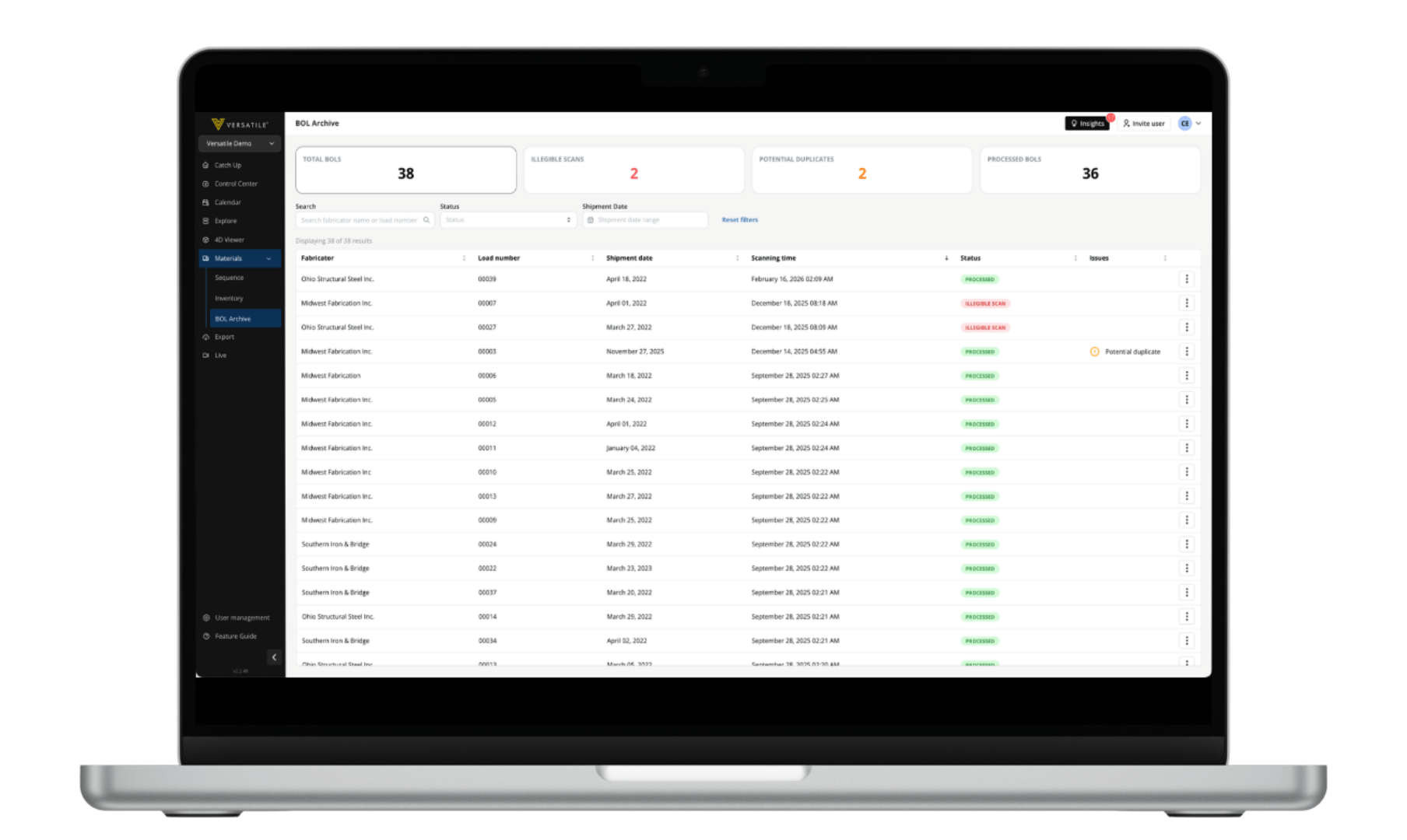
Disputes become unresolvable. When a piece is missing, the finger-pointing starts immediately. The fabricator says it was on the truck. The erector says it wasn't in the yard. The GC wants to know why erection is behind. Without a verified, timestamped record of what was actually delivered and when, these disputes consume days of PM time and damage the relationships that keep future work flowing.
Margin leaks go undocumented. The cost of a missing piece isn't just the piece itself. It's the schedule disruption, the out-of-sequence work, the extra crane time, and the coordination overhead. On most projects, these costs get absorbed because nobody can quantify them precisely enough to recover them. They just disappear into the job's margin.
"We were eating costs on every project because we couldn't prove when deliveries went wrong. We knew it was happening. We just couldn't document it fast enough." (Operations Director, northeast steel erector)
How Material Tracking Works Now
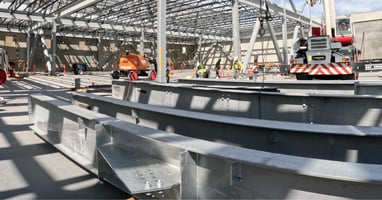
Modern material tracking creates a digital chain of custody for every piece of steel, from the fabricator's shipping record through delivery, staging, rigging, and final placement in the structure.
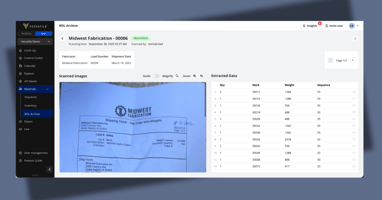
Step 1: Delivery capture. When a load arrives on site, the delivery is logged digitally with piece marks, quantities, load number, and arrival timestamp. The system captures what actually showed up, not just what the BOL says should have shown up.
Step 2: Match to the erection plan. The delivered pieces are compared against what the erection sequence needs. The system flags which pieces are now available, which are still missing, and whether the delivery aligns with what the raising gang needs next. If a critical piece didn't make the truck, the PM knows today rather than discovering it tomorrow with a crane ready and nothing to pick.
Step 3: Validate placement. As pieces are rigged and erected, the crane intelligence system tracks which pieces have been placed and where. This validation runs through multiple iterations, matching crane activity data against the project's IFC model by Fabrication ID and Design ID. The result is a verified record of what's in the structure, not an estimate based on someone's walk-through.
Step 4: Continuous record. The system maintains a running digital record of every piece's status: delivered, staged, rigged, erected. This record is accessible to the erector, the GC, and the fabricator. When everyone sees the same data, disputes turn into conversations.
What This Means for Your Daily Workflow
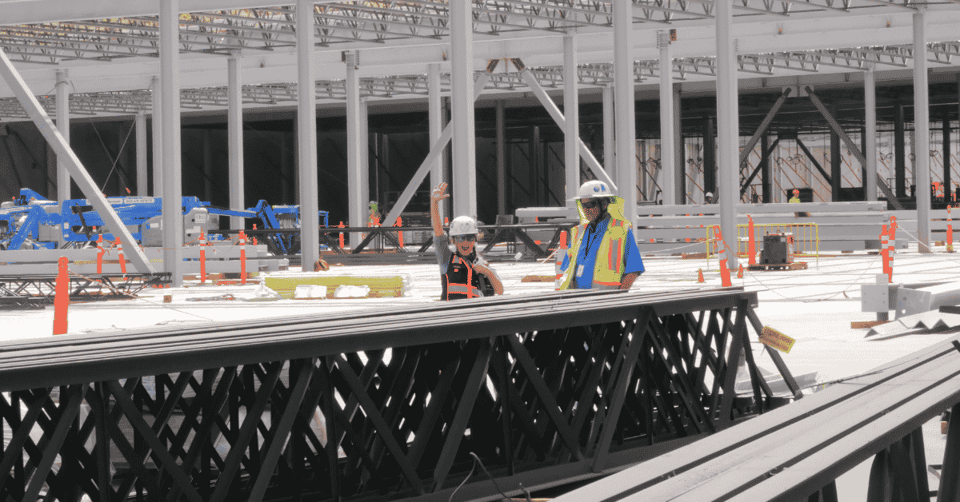
For the raising gang, nothing changes. The crew rigs and sets steel exactly the way they always have. The material tracking system works alongside the crane intelligence device that's already on the hook, capturing data passively.
For the foreman, the shift is in planning. When you can see exactly which pieces are on site, verified and staged, you can plan tomorrow's sequence tonight with confidence. No more showing up in the morning and discovering that three pieces you need are missing or misidentified.
"Knowing what was actually in the yard, verified against the erection plan, let us sequence two days ahead instead of scrambling every morning." (Foreman, midwest steel erector)
For the PM, the value is in documentation and protection. Every delivery is recorded. Every discrepancy is flagged. When the fabricator disputes a late shipment or the GC questions why erection paused for half a day, the data is there. Timestamped, verified, and tied to piece-level IDs.
"We had a fabricator claim they delivered a full load. We pulled up the material records and showed them three pieces that never made it to the yard. That was a $15,000 conversation that we would have lost without the data." (PM, southeast steel erector)
The Connection to Production Intelligence
Material tracking doesn't exist in isolation. It feeds directly into production intelligence. Every piece that's tracked through delivery and erection becomes a data point in the larger picture of how the project is performing.
When you combine delivery data with crane pick data and IFC model validation, you get a complete view of production. The pieces that showed up on Monday's truck, got staged on Tuesday, and were erected on Wednesday are all tracked automatically. That data rolls up into daily production reports, 4D model updates, and project-level analytics without anyone typing a single entry.
This is what makes material tracking more than a logistics tool. It's part of the evidence chain that protects your margin. The delivery record that proves a late shipment, connected to the crane data that documents the resulting delay, connected to the cost impact that justifies the backcharge. One continuous thread of verified data.
The Cost of Tracking Materials the Old Way
Every steel erection project has material coordination challenges. The question isn't whether deliveries will cause problems. The question is whether you'll have the data to document those problems when they cost you money.
Spreadsheets and phone calls track intent. They record what should happen. Digital material tracking records what actually happened. And in a business where your margin depends on proving what actually happened on the hook and in the yard, the gap between those two things is the gap between a profitable job and a loss.
Versatile has tracked over 2.4 million metric tons of structural steel in the last 12 months. Across that volume, the pattern is clear: erectors with verified material records spend less time on disputes, lose less production time to delivery issues, and protect more margin on every project.
Your crew knows how to put steel up. Material tracking makes sure everyone else knows it too.