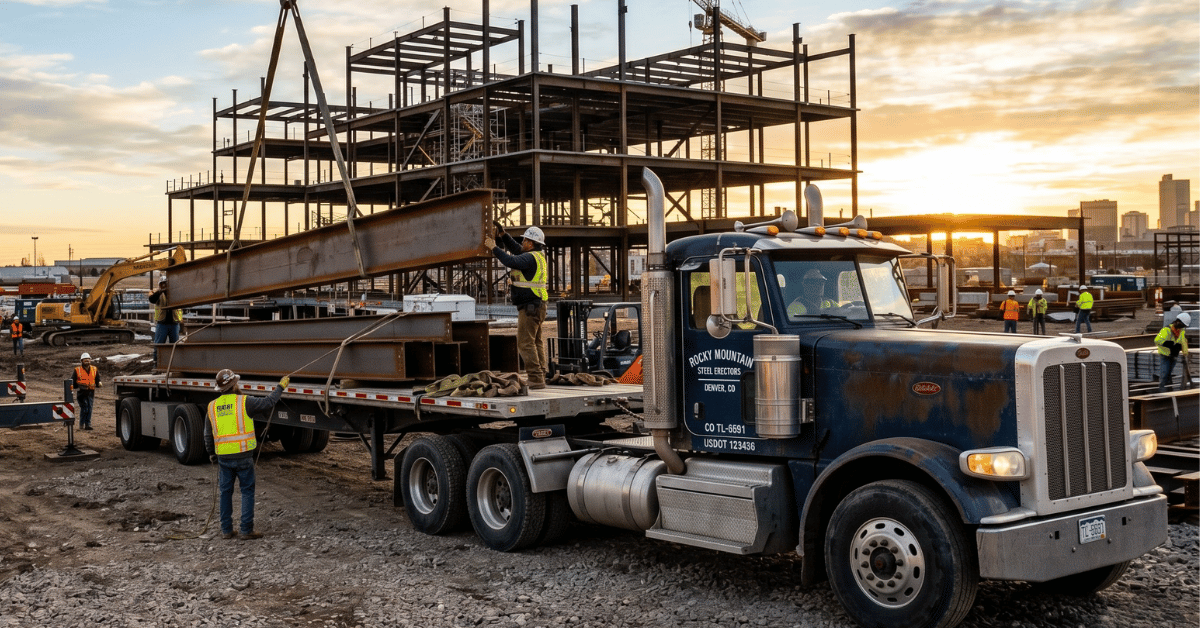
The BOL says 47 pieces. The driver says 47. Your guy on the ground counts them off the truck, signs the ticket, and the load gets staged in the yard. Two weeks later, during erection, piece HSS8x8-312 is nowhere to be found. The fabricator swears it was on the truck. Your team swears it wasn't. And the raising gang is standing idle at $1,000 an hour while everyone digs through paperwork trying to figure out who's right.
This is the BOL gap. The space between what a bill of lading says was shipped and what actually made it to your yard, verified and accounted for. On most steel erection projects, that gap is held together by a signature on a delivery ticket and the assumption that everyone counted correctly.
Assumptions don't hold up in disputes. Data does.
Why the BOL Alone Isn't Enough
A bill of lading is a shipping document. It tells you what the fabricator says they put on the truck. It does not tell you what actually arrived on your site in usable condition, staged in the right location, matched to the pieces your erection sequence needs next.
The gap between those two things is where margin disappears. And it happens in predictable ways.
Counts don't catch everything. A quick count off the truck confirms quantity, not identity. If the fabricator shipped 47 pieces but three of them are the wrong members for your current sequence, you won't know until the rigger goes looking for them. By then, the crane is waiting.
Piece marks get missed. In a busy yard with hundreds of members staged across multiple loads, individual piece identification by hand is slow and error-prone. A transposed number on a hand-written log can turn a delivered piece into a "missing" piece that triggers a reorder conversation nobody needed to have.
Timing matters as much as quantity. Even if every piece on the BOL arrived, the question that actually affects production is: did the right pieces arrive in time for the erection sequence? A complete delivery that's three days late for the planned sequence is a complete delivery that still costs you crane time.
What Closing the Gap Actually Looks Like
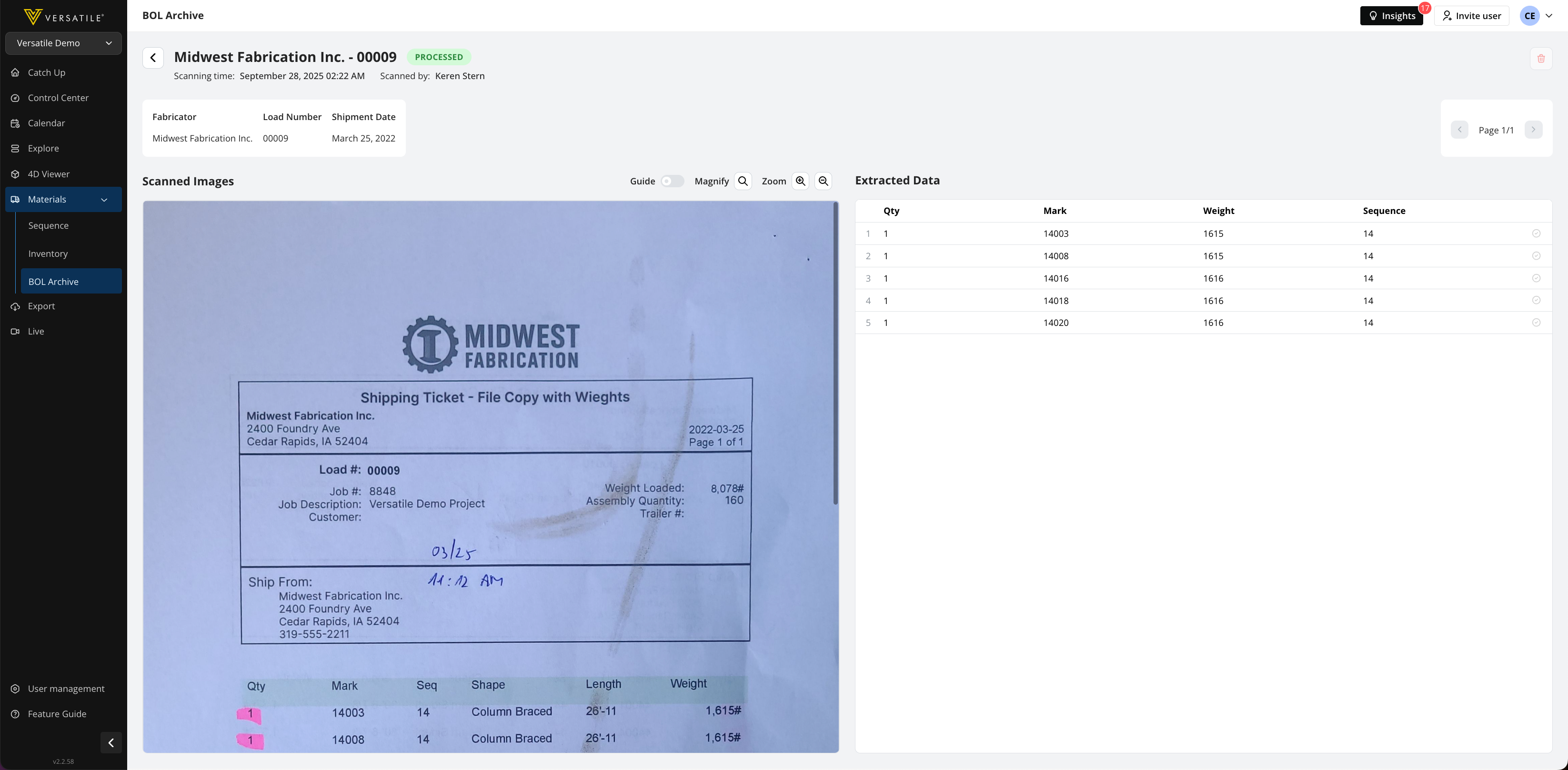
Closing the BOL gap means creating a verified digital record that goes beyond the shipping document. It means matching what arrived against what your project actually needs, piece by piece, with timestamps and identification that hold up when questions come later.
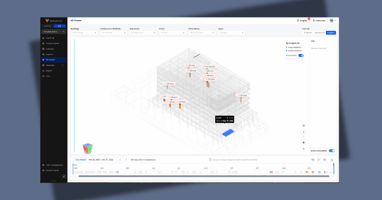
Delivery capture at the piece level. When a load arrives, each piece is logged digitally with its Fabrication ID, Design ID, load number, and arrival timestamp. This isn't a count. It's an identity check. The system knows which specific pieces are now on site, not just how many.
Automatic match to the erection plan. The delivered pieces are compared against what the erection sequence needs. The system flags which pieces are now available, which are still outstanding, and whether the delivery aligns with what the raising gang needs next. If a critical member didn't make the truck, the PM knows today.
Validated through erection. As pieces are rigged and set, the crane intelligence system tracks placement and matches each pick against the IFC model. This creates a complete chain: shipped, delivered, staged, erected. Every step verified. Every step timestamped.
"We had a fabricator dispute a late delivery that cost us half a day of crane time. We pulled the delivery records and showed them exactly which pieces arrived late and when. That was a $12,000 conversation we would have lost without the data." (PM, southeast steel erector)
The Three Disputes This Solves
The missing piece dispute. Fabricator says it shipped. Erector says it didn't arrive. With piece-level delivery capture, the record shows exactly what was received, identified by Fabrication ID, with a timestamp. No more relying on a signature and a count.
The late delivery dispute. The pieces eventually showed up, but not when the sequence needed them. The delivery record shows arrival date. The erection plan shows when those pieces were needed. The gap between the two is documented, quantified, and tied to the production impact.
The wrong-piece dispute. The fabricator shipped the right quantity but included members from a future sequence instead of the current one. Piece-level identification catches this at delivery, not during erection when the crane is already committed to a sequence that can't proceed.
What This Means for Your Daily Workflow
For the raising gang, nothing changes. The crew rigs and sets steel exactly the way they always have. The delivery verification and piece matching work alongside the crane intelligence device that's already on the hook.
For the foreman, it means planning tomorrow's sequence with confidence. When you can see exactly which pieces are on site, verified against the erection plan, you can sequence two days ahead instead of scrambling every morning.
For the PM, the value is protection. Every delivery is recorded at the piece level. Every discrepancy is flagged. When the fabricator disputes a shipment or the GC questions why erection paused, the data is there. Timestamped, verified, and tied to specific piece IDs.
The BOL Is a Starting Point, Not the Final Record
A bill of lading tells you what left the fabrication shop. It doesn't tell you what made it to your yard, whether it matched your sequence, or what happened when it didn't. Closing that gap with verified, piece-level delivery data means fewer disputes, less scrambling, and a defensible record that protects your margin for the life of the project.
Versatile has tracked over 2.4 million metric tons of structural steel in the last 12 months. Across that volume, the pattern is consistent: erectors with verified material records spend less time arguing about deliveries and more time setting steel. Your crew's time on the hook is too valuable to lose to paperwork gaps.