You've got a BIM model. It shows every beam, column, and brace in the structure. It tells you what should be there. What it doesn't tell you is what's actually been built, when each piece was set, and whether the erection sequence is tracking to plan.
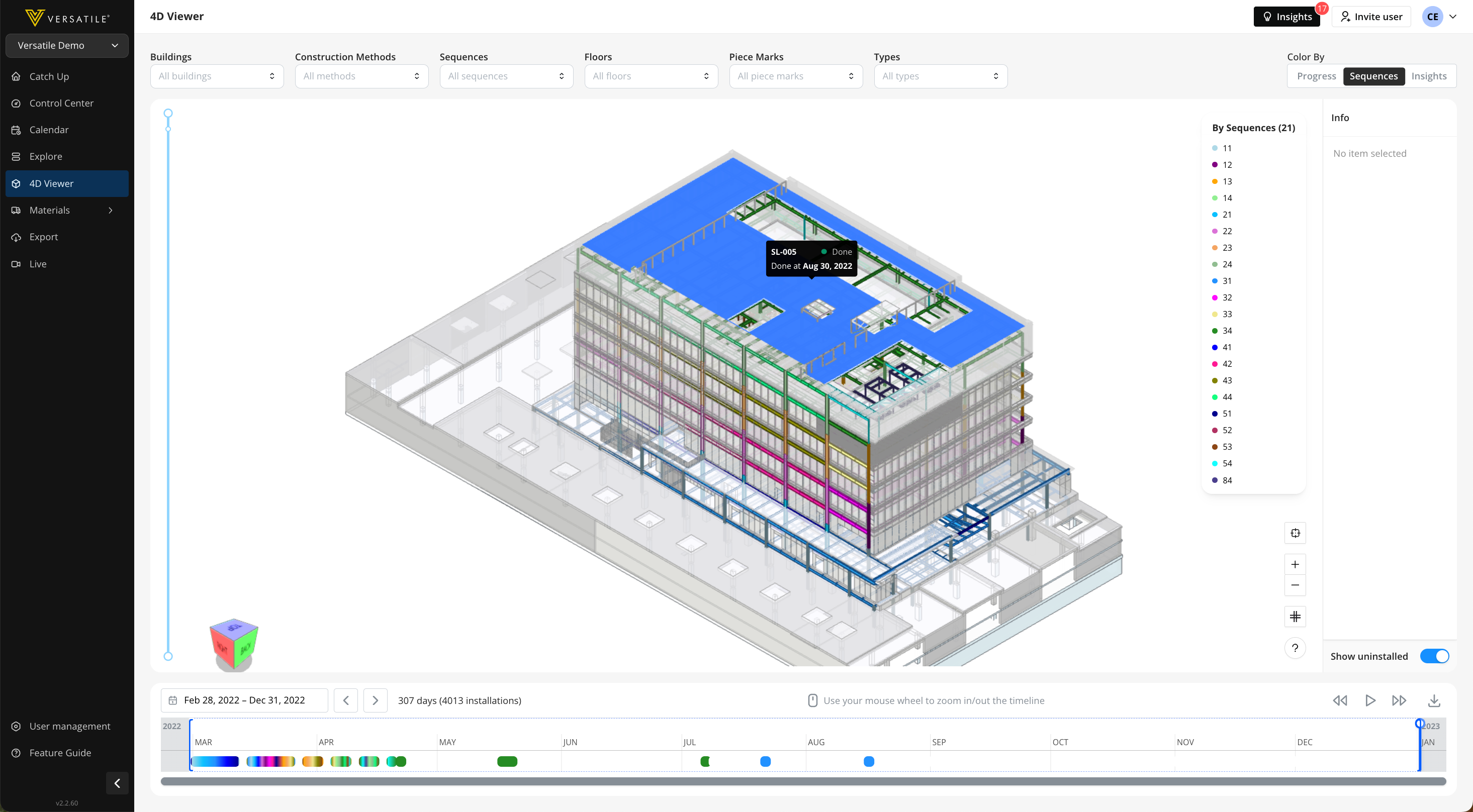
A 4D BIM viewer closes that gap. It takes the geometry from your 3D model and adds time. Not planned time from the schedule. Actual time from the hook. When a piece was rigged, when it was placed, and how that compares to where the project should be.
What "4D" Actually Means in Practice
The industry loves its dimensions. 3D is geometry. 4D adds time. 5D adds cost. In theory, they all sound useful. In practice, most field teams care about one thing: can I see what's built versus what's planned, and can I trust that the data is accurate?
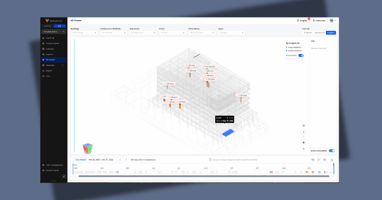
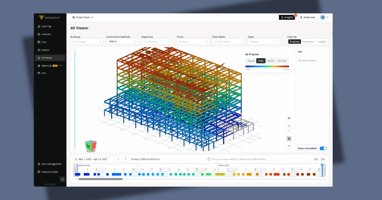
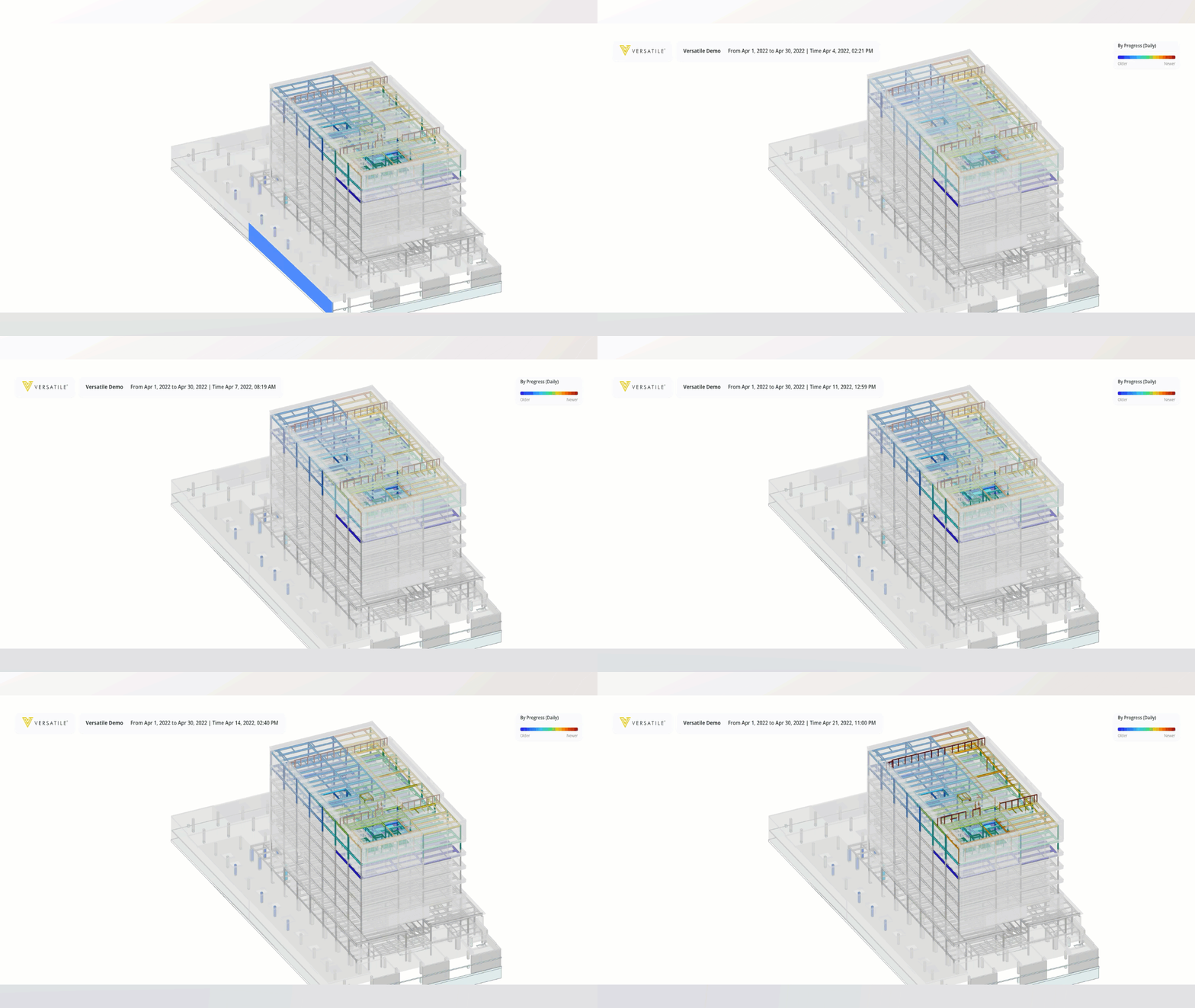
A 4D viewer shows the project as it actually progresses. Pieces that have been erected are color-coded to show when they were placed. Pieces that haven't been set yet show as planned. The model updates automatically as crane data comes in, with approximately 98% accuracy on installation status.
No manual updates. No one in the trailer clicking through the model and changing piece statuses by hand. The data flows from the hook to the model through validated crane intelligence.
"Being able to see what was actually built versus what was planned, in 3D with time attached, changed how we run project meetings." (Project Engineer, top 10 GC)
How Steel Erectors and GCs Use It
Progress meetings. Instead of slides with estimated percentages, the team looks at the actual model. You can zoom into a specific zone, see which pieces are set, and compare progress against the schedule visually. When someone asks "are we behind in zone 3?" the answer is visible, not verbal.
Recovery planning. When the schedule slips, the 4D view shows exactly where and when the deviation started. Was it a delivery issue that forced out-of-sequence work? A coordination problem with another trade? The model doesn't just show that you're behind. It shows why, backed by pick-level data.
Closeout documentation. At the end of the job, the 4D model serves as a verified record of how the structure was built. Every piece, every date, every sequence. This is documentation that holds up in claims, disputes, and post-project reviews.
Owner meetings. Project owners want to see progress, not hear about it. Walking an owner through the 4D model, showing them exactly what's been erected and how it tracks against the schedule, is more convincing than any PowerPoint deck. "We showed the owner the 4D view and they could see progress for themselves. That ended the weekly 'are we on schedule' phone call." (PM, healthcare GC)
The Difference Between Manual 4D and Machine-Collected 4D
Some teams already use 4D BIM, but they update it manually. Someone walks the site, notes what's been erected, goes back to the trailer, and updates the model. That process is time-consuming, error-prone, and always at least a day behind reality.
Machine-collected 4D is different. The crane intelligence device captures every pick automatically. Each pick is matched against the IFC model by Fabrication ID and Design ID through multiple validation iterations. The model updates itself based on verified data from the hook.
The result is a 4D view that reflects what's actually in the structure right now, not what someone thought they saw yesterday.
Why This Matters for Margin Protection
A 4D viewer isn't just a visualization tool. It's an evidence system.
When the erection sequence deviates from plan, the 4D model shows exactly when and where. When a trade dispute arises over who had the crane and what got built during their window, the model provides timestamped, piece-level proof. When the project reaches closeout and the GC questions two weeks of production from three months ago, the 4D record is there.
At its core, the 4D viewer takes the same daily production data that protects your margin through reporting and anomaly documentation, and gives it a visual, spatial dimension. You can see the job as it was actually built, not as someone remembers it.
For steel erectors operating on tight margins with GCs watching every move, that visibility isn't a luxury. It's protection.