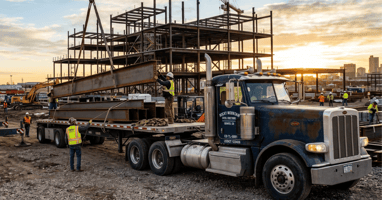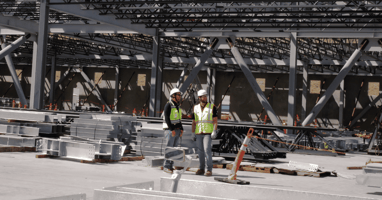
A tower crane on a cast-in-place concrete project doesn't move the same way as a crawler setting precast panels or a mobile crane topping out steel. The sequences are different, the crew rhythms are different, and what "a good day" looks like is completely different. So why would you measure all three the same way?
That's the disconnect most project teams run into when they start looking at crane data. The numbers are there, but without context for the construction type, they can mislead as easily as they inform. A picks-per-hour metric that looks sluggish on a steel job might actually reflect bundled lifts, not slow work. A concrete pour cycle that appears to drag might be running exactly on schedule once you account for the bucket exchange rhythm.
The key isn't just collecting crane data. It's interpreting it through the lens of how each construction type actually works on the pad.
What Crane Data Actually Captures (and Why Construction Type Matters)
At its core, crane intelligence tracks what the crane is doing throughout the shift: picking, swinging, holding, idling, waiting. Every lift has a signature. The crane's movements tell a story about crew pace, material flow, sequencing decisions, and downtime. But the story changes depending on what's being built.
On a structural steel project, the crane might make 15 to 25 picks in a shift, each one a deliberate, sequenced event. On a cast-in-place concrete job, the crane could be cycling a concrete bucket dozens of times during a single pour, with a completely different cadence. Precast sits somewhere in between, with fewer but heavier picks, longer hold times, and a rhythm dictated by the fab shop's delivery schedule as much as the crew's speed.
If you dump all of that into the same dashboard without distinguishing the activity type, you get noise. Worse, you get conclusions that penalize crews for doing their jobs well.
Structural Steel: Where Every Pick Has a Sequence Number
Steel erection is the construction type where crane data has the most immediate, visceral impact. Every beam, column, and connection piece has a place in the erection sequence. When the crane is working, the raising gang is working. When the crane is waiting, the raising gang is standing. At $1,000 per hour or more for a fully loaded crew, those minutes matter.
But here's the problem erectors keep running into: shake-out and unload time gets bucketed into erection time, making the picks-per-hour metric look worse than reality. A crew that efficiently unloads a truck and stages material on the ground is being "penalized for being efficient," as one erector put it, because the data doesn't distinguish between productive staging and slow erection.
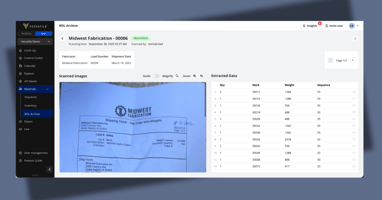
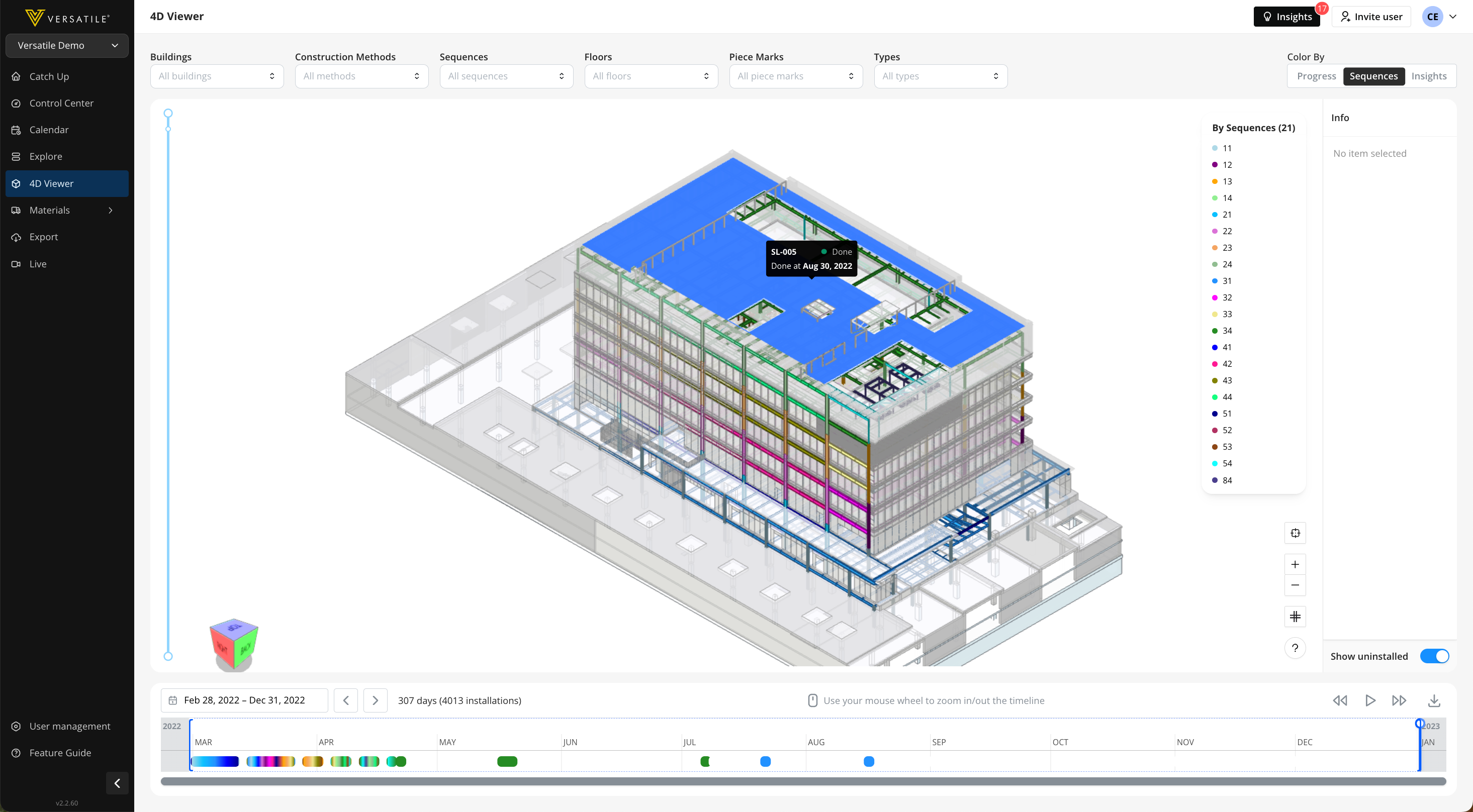
This is exactly where production intelligence (not just tracking) makes the difference. Versatile's platform separates shake-out activity from erection picks automatically, so the progress data reflects what actually happened without anyone on the crew needing to log it. The Daily Production Intelligence report breaks the shift into distinct phases: unload/shake-out, erection, re-rigging, and idle time. Erectors see their real production rate, and GCs see where the time actually went.
"Whether it's a pour cycle or a steel sequence, the crane data tells you where the time is going." That's how an Operations Director at a national builder described it. For steel, "where the time is going" usually means one of three things: waiting on iron delivery, waiting on bolters to finish connections, or re-rigging between pieces. The Insight cards in the platform flag these patterns automatically, so the conversation moves from "you're behind" to "here's what's slowing you down."
One international fabricator/erector is already using this approach to feed field data back into their design and fabrication loop, benchmarking erection rates across projects to improve connection details and delivery sequencing before the next job even starts.
Cast-in-Place Concrete: Reading the Pour Cycle
Concrete work has a fundamentally different relationship with the crane. The crane isn't placing discrete pieces. It's cycling: hoisting a bucket, swinging to the pour location, holding while the crew places and vibrates, swinging back for a refill. The metric that matters isn't picks per hour. It's cycle time per bucket and total pour duration versus plan.
The challenge with cast-in-place is that so much of the schedule depends on formwork, rebar, and inspection sequences that happen before the crane even starts pouring. Crane data can't tell you whether the rebar was tied correctly. But it can tell you exactly how long the pour took, how consistent the bucket cycles were, and whether the crane sat idle between pours waiting on the next section to be prepped.
That idle time between pours is where 30 to 60 minutes of micro-delays accumulate daily on many projects. Each one feels insignificant in the moment. A five-minute wait for the pump truck to reposition. A ten-minute hold while the crew moves to the next bay. But over a week, over a floor cycle, those minutes add up to days. And on a project where the pour schedule drives the critical path, days translate directly to margin.
The platform's approach to concrete projects focuses on cycle consistency. Rather than counting individual picks, it tracks pour events as complete sequences: setup, pour, finish, transition. The automated reporting compares each cycle against the project baseline, so superintendents can see whether their floor-to-floor time is tightening or drifting without pulling together spreadsheets at the end of the week.
As one Superintendent at a national GC described it, the calendar view comparing planned versus actual "has been the game changer for them especially comparing to actuals." When you can see that Floor 12 took two days longer than Floor 8, and the data shows exactly which pours ran long and where the idle gaps appeared, you have something to act on for Floor 16.
Precast: Precision Setting Meets Delivery Logistics
Precast is the construction type where the line between manufacturing and construction blurs. The pieces show up on a truck, sequenced (ideally) by the fab shop to match the erection plan. The crane picks, swings, sets, and the crew makes connections. It's methodical, and the pace depends as much on what arrives when as it does on the crew's skill.
Crane data on a precast job captures two things that matter enormously: setting rate (pieces per hour, adjusted for weight and complexity) and wait time between deliveries. If a crew can set eight panels per shift but only six trucks show up, the crane data shows exactly how much capacity went unused. That's information the erector needs when the GC asks why they're behind schedule, and it's information the GC needs when evaluating whether the delivery plan is holding up.
The nuance with precast is that not all picks are equal. Setting a 40,000-pound double tee is a different operation than placing a 5,000-pound wall panel. Bundled lifts, where multiple smaller pieces are rigged together, further complicate simple piece-count metrics. The platform accounts for this by categorizing picks by type and weight class, so the production data reflects the actual complexity of the work.
A recent pilot with a precast and steel erector expanded from one month to two months specifically because the data proved its value across both scopes. When you can show a GC that your crews are consistently hitting their setting targets and that the gaps are coming from delivery timing or site access constraints, you protect your margins by protecting the truth of what happened on the pad.
One Platform, Three Lenses
The reason a single platform works across these three construction types isn't because the data is the same. It's because the underlying approach is the same: capture what the crane does, classify the activity automatically, and present it in the context that matters for the people doing the work.
For steel erectors, that means separating shake-out from erection and showing real production rates. For concrete teams, it means tracking pour cycles and surfacing idle gaps between sequences. For precast crews, it means connecting setting rates to delivery logistics and accounting for piece complexity.
The philosophy behind it is straightforward: the data should work for the people on the pad, not against them. When an erector's picks-per-hour number includes time they spent efficiently staging material, the data is working against them. When a concrete crew's pour duration includes a 45-minute inspection hold that was out of their control, the data is working against them. Fixing that isn't a feature. It's a baseline requirement.
What matters is that the same crane, wearing the same sensors, generates insights that speak to the people who actually use them: the foreman checking the day's numbers, the PM comparing this floor to the last one, the erector proving their crew's pace to a skeptical GC. Built for the pad, not the trailer.
Across all three construction types, the pattern is the same. The crews aren't slow. The context is missing. Once you add that context, once the crane data accounts for what kind of work is happening and not just how many times the hook moved, the conversation shifts. It stops being about blame and starts being about protecting the 2 to 6 margin points that separate a good project from a losing one.
And that shift, from tracking idle time to understanding why the time was lost and what to do about it, is what turns crane data from a reporting tool into production intelligence.